
Intro: The Showroom Is Designed for You
Here's something most supplier visits get wrong: the showroom is the one room in a factory that's built to impress you. Good lighting, best samples, newest products. It tells you what the factory can do — not what it does every day.
If you want to know how a bag factory actually runs, spend your time in four other places: the material warehouse, a bonding or assembly workstation, the QC bench, and the sample room. You can check all four on a short visit — and all four work over a video call too, which matters if you're sourcing remotely.
This article walks through each one: what to look at, what a good answer sounds like, and what should make you cautious.
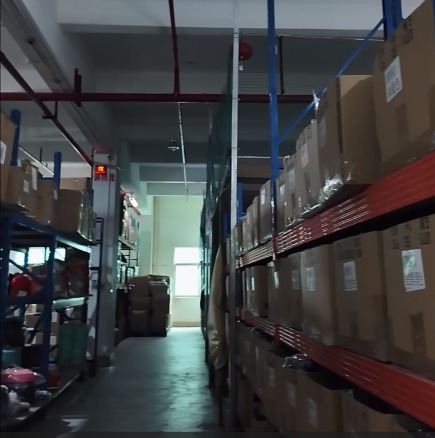
1. The Material Warehouse: What They Stock Tells You What They Can Make
A factory's fabric and trims warehouse is the fastest honesty test there is. A workshop full of sewing machines proves nothing — machines can be borrowed, space can be rented. Shelves of stocked materials cannot.
What to look for:
| What you see | What it means |
|---|---|
| Rolls of multiple base fabrics (canvas, nylon, polyester, coated materials) | The factory produces across material types, not one specialty — more flexibility for your product line |
| Labelled, shelved, identifiable storage | Material control exists. Traceability starts here — a mixed-up warehouse means a mixed-up factory |
| Same material in several colourways | They run colour variants regularly — mixed-colour orders and Pantone matching are routine, not exceptions |
| Recent wear on the stock (short roll ends, partial shelves) | Materials actually move. A pristine, untouched warehouse is a bad sign |
One question to ask on the spot: "Which of these fabrics do you keep in stock, and which do you buy per order?" Stocked materials mean shorter lead times and lower MOQs on repeat styles. Per-order purchasing isn't wrong — but the factory should know the difference without checking with someone else.
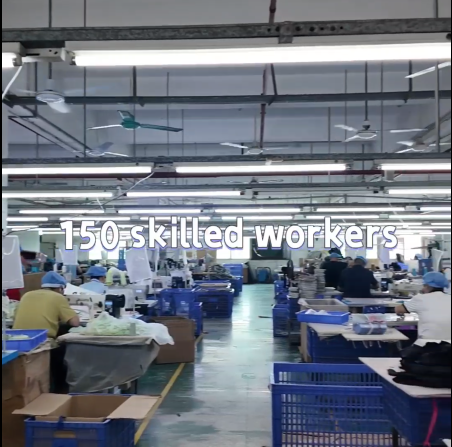
2. A Bonding or Assembly Workstation: Where Quality Habits Show
Adhesive work — bonding straps, linings, reinforcement patches — is detail work that sewing machines can't rescue. Once glue is applied wrong, the defect is baked in.
What to look for:
- The worker's rhythm. Steady hands, consistent application, parts staged in order. Rushed, uneven glue lines show up later as peeling straps and delaminated patches.
- Curing time being respected. Bonded parts should rest or be pressed for the material's required time. A station where parts go straight from glue to sewing is a shortcut that costs you later.
- Controlled application. Brushes, rollers or dispensers rather than a free-hand smear. The goal isn't beauty — it's repeatability, piece after piece.
You don't need to know adhesives to judge this. You need to see whether the same motion happens the same way, over and over. Consistency is the whole product.
If you're vetting by video, ask the supplier to walk you through one workstation start to finish — one part, one operator, no editing. Suppliers who control their production are happy to do this. Companies who aren't, aren't.
3. The QC Bench: Watch Hands, Not Posters
Every factory has a quality-control slogan on the wall. The real test is what hands are doing at the QC bench — and how often.
What to look for:
- Hands on product. Zippers worked through full travel, buckles pulled, seams flexed, straps tugged. If the QC bench is a table where bags sit and get looked at, that's not inspection — that's waiting.
- Where rejects go. Ask to see the reject area. This is the single most revealing request in any factory visit. A factory confident in its process shows you its rejects. A factory that can't find them is either too new to have data or too uncomfortable to be honest.
- Frequency. Inspection at end-of-line only catches everything too late. Ask what gets checked mid-line, and how often.
4. The Sample Room: The Receipts
The sample room is where a factory's history sits on shelves — and it's the most underused room in supplier vetting.
What to look for:
- Breadth. Samples across bag types, materials and structures mean the factory has solved problems before yours arrives. Depth in one category is fine if that's your category — but one style repeated dozens of times is a red flag, not a résumé.
- Construction quality on old samples. Look at samples that have been handled: seam integrity, hardware finish, edge paint. Showroom samples get touched constantly — they're a better durability test than the fresh one made for you.
- Whether it grows. Ask how long they've been making the styles on the shelf. A sample room that spans years is a production history; a sample room of the same five bags is a start.
A practical note for buyers: if a sample on the shelf carries another customer's brand, don't photograph it, and don't expect to. Respecting that boundary is also how you signal that you'll expect the same treatment for your own products.
5. The 30-Second Version
| Place | The one thing to check | Good sign | Bad sign |
|---|---|---|---|
| Material warehouse | Is stock moving? | Multiple materials, labelled, worn shelves | Empty or pristine storage, single material type |
| Bonding / assembly | Same motion, repeated? | Steady rhythm, curing time respected | Rushed application, glue-to-sewing with no wait |
| QC bench | Hands or eyes? | Pulls, works, flexes — and can show you rejects | Visual-only checks, can't locate the reject area |
| Sample room | History on the shelf? | Breadth, worn samples that still hold up | Five styles, all pristine, all recent |
None of this replaces asking for references, samples or a pre-shipment inspection. But it's the fastest filter you can run — and it works the same whether you're standing in the factory or watching from your desk.